In this article
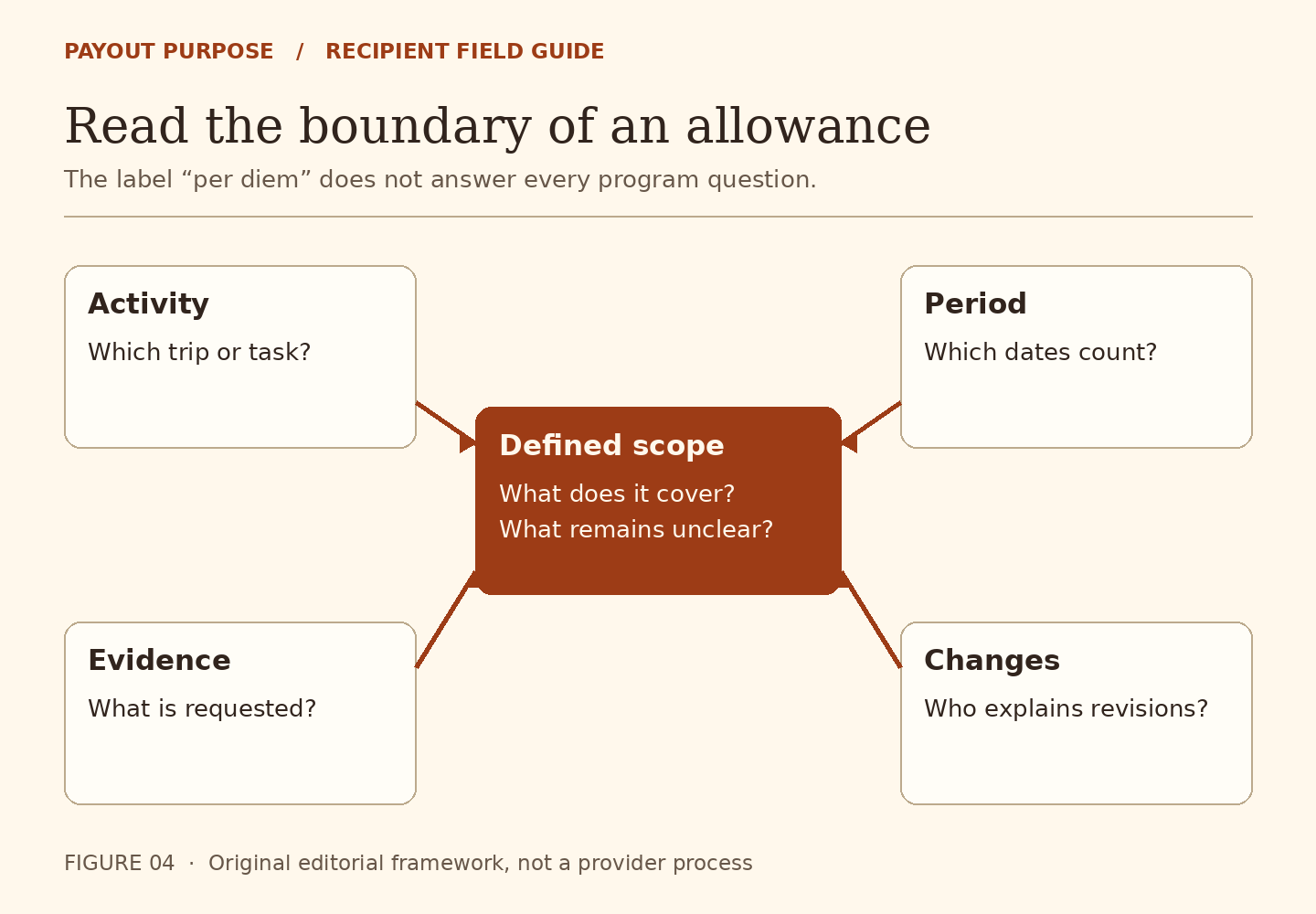
The phrase per diem does not tell a recipient everything needed to interpret a payout. A useful explanation identifies the covered days, the covered categories and the treatment of exceptions. Without those boundaries, a daily amount can be mistaken for an all-purpose travel allowance or a reimbursement of every actual expense. Begin with the instructions for the particular event. Do not borrow a rate or rule from another organization, a government schedule or a previous trip unless your program expressly incorporates it.
Describe the covered activity first
Identify the trip, assignment or event named in the program materials. Write its actual start and end dates, then distinguish those dates from any days the sponsor says are eligible for an allowance. A three-day event can involve travel on additional days, but that fact alone does not establish coverage for the extra time. Similarly, an overnight stay does not by itself establish which calendar day receives which treatment.
Ask about the unit used in the instructions. Does the stated amount apply to a calendar day, an event day, a travel day or another defined period? If the first and last days are treated differently, ask for that explanation before multiplying a headline daily figure by the number of days away. The aim is to understand the sponsor’s calculation, not to build an alternative schedule from assumptions about what seems standard.
Separate categories before comparing costs
List the categories the program explicitly includes, such as meals, lodging or local transport, only where its instructions name them. Place unmentioned categories in an open-question list. A statement about meal costs does not silently include hotel expenses. A reference to travel expenses may need clarification if a later paragraph describes a narrower allowance. Look for exclusions, direct organizer payments and any instruction about additional claims.
Actual spending and the program’s allowance basis can be different concepts. Some programs may use a stated daily amount; others may describe reimbursement against a limit or another arrangement. Ask which model your instructions mean. Do not assume that underspending creates an amount you must return, or that overspending creates a further entitlement. Both questions depend on the actual program and may require authoritative guidance beyond a general educational article.
A fictional example: the same day, different coverage
Imagine an event organizer that provides a written meal allowance for two workshop days and handles lodging separately. The first day includes a hosted lunch. The second workshop day is later shortened. Recipient Priya sees a daily figure in the original notice but no explanation of hosted meals or partial days. Multiplying that figure by two does not resolve the missing rules. Nor does subtracting the restaurant price of the hosted lunch, because that would invent a calculation.
Priya can ask two precise questions: “Does the provided lunch change the first day’s meal allowance under this program?” and “Does the shortened second day change which daily amount applies?” She can then ask whether the updated answer changes the previously communicated payout. These questions distinguish event facts from the sponsor’s policy decision. The organizer might clarify that nothing changes, or explain a specific adjustment; the example does not presume either result.
Keep itinerary changes connected to the rule
A changed arrival date, canceled overnight stay or organizer-provided meal is worth describing when it touches a condition in the instructions. Record the changed fact plainly and identify which category may be affected. Avoid attaching a complete personal travel history when one event day is the issue. If the sponsor needs more detail, ask what is necessary and how to provide it through an approved channel.
When instructions mention receipts, identify what they document. Are receipts requested for all relevant expenses, only additional claims, or a specified exception? Do not interpret the term per diem as permission to discard records that the program explicitly asks you to retain. Conversely, do not create a receipt requirement because another organization used one. The recipient’s job is to follow the applicable instructions and surface missing information, not harmonize every travel practice into one universal rule.
Write a scope statement that survives a change
A useful summary might say: “This event allowance concerns meals on the two named workshop days; lodging is handled separately; hosted-meal treatment awaits clarification.” It contains both known scope and a visible uncertainty. Once the question is answered, replace the uncertainty with the actual explanation and keep the source date. If a second event uses a different rule, give it a separate description instead of overwriting the first event’s conditions.
Before considering the matter understood, check that each day and category in your question has an answer. A response explaining the normal daily amount may leave the partial-day issue open. A response about lodging may not answer meals. This reading method helps identify those gaps without offering a tax rate, legal conclusion or spending recommendation. The fictional examples do not describe a standard Corpay Prepaid policy, and no particular allowance model should be inferred from the payment brand.